Bookkeeping Basics
A Small Business Owner’s Guide to Monthly Bookkeeping
Quick answer
What monthly bookkeeping really involves, why it matters, and how to make it painless — even if you’d rather do literally anything else with your time.
Monthly bookkeeping is the single most boring, most valuable habit a small business can build. Done right, it turns tax season into a non-event and gives you numbers you can actually trust when you make decisions. This guide covers what monthly bookkeeping really involves and how to keep it from eating your life.
What monthly bookkeeping actually includes
At a minimum, monthly bookkeeping means recording every transaction, categorizing it correctly, reconciling your bank and credit card accounts, and producing a profit & loss statement and balance sheet for the month. Done consistently, that cycle produces a clean, comparable financial history you can use to spot trends, price confidently, and file taxes without panic.
The monthly close, step by step
1. Capture every transaction
Every dollar in and out gets entered — ideally automatically through bank feeds in QuickBooks Online or Xero. The goal is zero missing transactions, including reimbursements, owner draws, and small cash purchases.
2. Categorize correctly
Each transaction lands in the right account in your chart of accounts. Consistent categorization is what makes month-to-month comparison meaningful; sloppy categories make every report useless.
3. Reconcile
Reconciliation matches your bookkeeping records to your actual bank and credit card statements, line for line. It’s the proof that nothing was missed, duplicated, or miscoded. If you only do one step well, do this one.
4. Close and report
Once reconciled, the month is “closed” and you generate your P&L and balance sheet. Closing the month means you stop editing it, which protects your historical numbers from silent changes.
How often should you reconcile?
Monthly, at minimum. High-transaction businesses benefit from weekly reconciliation because it catches errors while they’re still small and easy to fix. Letting reconciliation slide for months is how small mistakes become expensive catch-up projects.
Signs your monthly bookkeeping is working
- Every bank and card account reconciles to the penny, every month.
- You can pull a clean P&L for any month in minutes, not hours.
- You know your real profit margin — not just your bank balance.
- Tax time is a file-the-numbers exercise, not a forensic accounting emergency.
Doing it yourself vs. outsourcing
Software makes DIY bookkeeping possible, but possible isn’t the same as a good use of your time. Most owners underestimate how many hours monthly bookkeeping eats and overestimate how much they’ll enjoy it. A dedicated bookkeeping service keeps the work consistent, accurate, and off your plate — and the cost is almost always less than the value of the hours you’d spend on it. See how outsourced bookkeeping compares in our overview of what a bookkeeping service should deliver. And if a business loan is in your plans, clean monthly books are exactly what lenders want to see.
A realistic monthly timeline
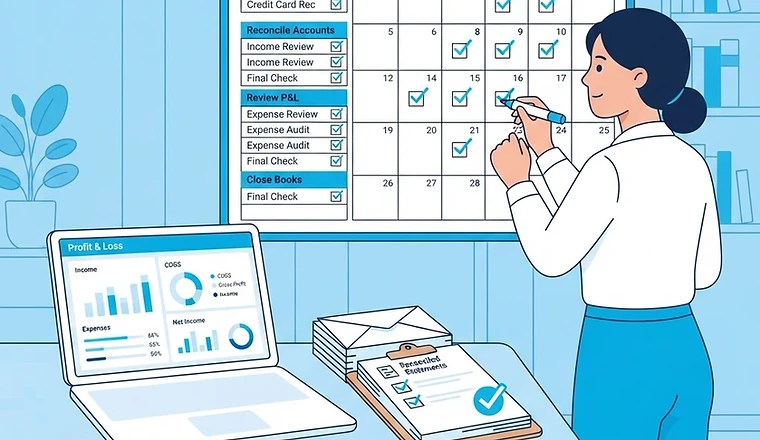
Many owners treat month end as a single event. It works better as a short sequence. In the first days of the month, categorize new transactions and chase missing receipts. Next, reconcile each bank and card account to its statement. Then review the profit and loss and balance sheet for anything that looks off, and note questions. Finally, save the reports and close the month so later edits do not quietly change old numbers.
The exact days will depend on when statements arrive and how many accounts you have. The habit matters more than the schedule: the same steps, in the same order, every month.
If your books are already behind, start with catch-up bookkeeping to get current, then move to a monthly cadence. Trying to maintain messy books monthly just preserves the mess. At Mispar, we’ll get you caught up and then keep you clean every month — book a call to see the plan.
Frequently asked questions
How long does monthly bookkeeping take?
It depends on transaction volume and how organized your records are. A tidy business with few accounts needs far less time than one with many accounts and missing receipts.
What should I do if I miss a month?
Catch up as soon as you can, starting with the oldest month. Reconcile each month in order so errors do not carry forward.
Do I need to close the books every month?
Closing the month, meaning locking prior periods after review, keeps reports stable and is a good habit even for small businesses.
Keep reading

Bookkeeping Basics
Bookkeeping vs. Accounting: What’s the Difference and Which Does Your Business Need?
Bookkeeping and accounting are often used interchangeably, but they’re two different jobs. Here’s what each one does, how they overlap, and which your small business actually needs.

Monthly Bookkeeping
What Does a Bookkeeper Do Each Month? A Small Business Owner's Guide
Each month, a bookkeeper records transactions, reconciles accounts, checks invoices and payroll, and prepares your reports. Here is exactly what should happen every month — and what you should receive.
Written by
Moshe
Senior Account Manager, Mispar
Moshe is a Senior Account Manager at Mispar who works directly with small business owners and freelancers to keep their books clean, reconciled, and tax-ready every month.
More about Mispar